Lift stations play a critical role in wastewater collection systems, keeping flow moving through gravity-defying terrain. Yet, they also represent one of the most common points for odor complaints. Without proper control, hydrogen sulfide and other gases produced inside wet wells can escape through vents or maintenance openings, affecting nearby neighborhoods and damaging infrastructure.
At Webster Environmental Associates, Inc. (WEA), we design and implement reliable lift station odor control systems that eliminate nuisance odors, extend equipment life, and help utilities maintain positive relationships with their communities.
 Understanding the Source of Lift Station Odors
Odors at lift stations develop when wastewater becomes stagnant and oxygen-deprived. In these anaerobic conditions, bacteria convert sulfates into hydrogen sulfide (H₂S), a gas with a distinctive “rotten egg” smell that can corrode metal, concrete, and electrical components.
As the gas escapes into the atmosphere, even low concentrations can create odor complaints and workplace safety concerns. Over time, corrosion from hydrogen sulfide also weakens wet wells, piping, and ventilation systems, leading to expensive rehabilitation projects if left unaddressed.
WEA tackles these challenges with a scientific, data-driven approach—identifying the precise odor sources, measuring gas concentrations, and engineering customized systems that control emissions at their origin.
A Proven Process for Lift Station Odor Control
Effective odor control begins with a clear understanding of each site’s conditions. No two lift stations are identical, so Webster Environmental Associates begins every project with a comprehensive odor study.
Our engineers evaluate:
- Air and Liquid Chemistry: Testing for hydrogen sulfide, ammonia, and reduced sulfur compounds.
- Operational Data: Flow rates, retention time, and pumping cycles that influence odor generation.
- Environmental Conditions: Ambient temperatures, humidity, and surrounding land use that affect odor dispersion.
Using this data, we model odor behavior and design treatment systems that deliver measurable results. Every recommendation is supported by real field data, not assumptions.
Types of Lift Station Odor Control Systems
Because each lift station’s layout, load, and environment are unique, WEA provides a variety of treatment technologies that can be tailored for any application.
1. Gas-Phase Treatment Systems
When odor-causing gases escape into the atmosphere, gas-phase systems capture and treat them before release. WEA engineers design:
- Carbon Adsorbers: Activated or impregnated carbon units that trap hydrogen sulfide and volatile organic compounds efficiently.
- Biofilters and Biotrickling Filters: Natural systems that use microorganisms to biologically degrade odor compounds into harmless byproducts.
- Chemical Scrubbers: For higher-strength odors, scrubbers use chemical reactions—often involving sodium hypochlorite or sodium hydroxide—to neutralize gases.
Each system is designed to fit the specific airflow rate, odor concentration, and maintenance capabilities of the client.
2. Liquid-Phase Treatment Systems
Liquid-phase systems stop odors from forming inside the wastewater itself. These chemical dosing solutions are highly effective for lift stations with long detention times or force mains downstream. WEA’s engineers apply:
- Calcium Nitrate: Encourages aerobic activity that prevents sulfide formation.
- Iron Salts: React with sulfides to form stable, non-volatile compounds.
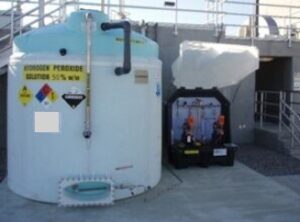
- Hydrogen Peroxide and Magnesium Hydroxide: Oxidize odor compounds while balancing pH levels.
By optimizing feed locations and dosing rates, WEA ensures these systems control odors while minimizing operating costs and chemical use.
3. Ventilation and Containment Design
Many odor issues originate from poorly designed ventilation systems. WEA evaluates and improves air handling at lift stations by:
- Installing sealed covers and vent piping that direct air through treatment units.
- Adding fans or blowers to maintain negative pressure and consistent air movement.
- Integrating monitoring systems that measure H₂S levels and adjust airflow automatically.
This engineering-driven approach ensures safe working environments and efficient odor containment.
Unbiased Engineering, Real Results
Unlike manufacturers or equipment vendors, Webster Environmental Associates remains independent of all product lines. This independence allows our engineers to compare multiple technologies objectively and select only the most effective and cost-efficient solutions for each client.
Our recommendations are based on data, performance history, and life-cycle cost—not on sales quotas or supplier agreements. That unbiased perspective is why WEA has become a trusted odor control consultant to municipalities, industrial facilities, and engineering firms across the United States.
Proven Experience Across the Country
With more than 750 odor control projects completed and over 100 years of combined experience, WEA has helped utilities large and small manage odors at pump stations, lift stations, and wastewater treatment plants nationwide.
Our designs have reduced hydrogen sulfide emissions by more than 90% in many applications, improving both air quality and infrastructure longevity. Clients appreciate that WEA provides ongoing support long after the system is installed—offering performance testing, training, and maintenance guidance to ensure continued success.
 Comprehensive Support from Start to Finish
Every lift station odor control project benefits from WEA’s full-service engineering support. We assist clients through each phase, including:
- Odor Study and Data Collection
- System Design and Equipment Specification
- Permitting and Air Dispersion Modeling
- Construction Administration and Start-Up Testing
Long-Term Operation and Maintenance Optimization
This complete project cycle allows clients to focus on operations while WEA manages the technical aspects with precision and transparency.
The Benefits of Effective Lift Station Odor Control
Investing in the right odor control system delivers significant value beyond cleaner air. Municipalities and utilities experience:
- Reduced Community Complaints: Improved relations with residents and businesses.
- Extended Equipment Life: Corrosion prevention saves on long-term maintenance costs.
- Regulatory Compliance: Helps meet local air quality and safety standards.
- Improved Worker Safety: Lower hydrogen sulfide exposure levels protect maintenance crews.
When designed and maintained correctly, odor control systems can operate for years with minimal intervention while maintaining consistent performance.
Partner with Webster Environmental Associates
For more than 40 years, Webster Environmental Associates has set the standard in lift station odor control system design. Our team combines scientific precision, engineering expertise, and decades of field experience to help clients achieve sustainable, low-maintenance odor control solutions.
Whether you need to assess an existing issue or design a system for a new facility, WEA can deliver the right solution—independent, cost-effective, and proven to work.
Contact Webster Environmental Associates today to learn how our engineers can help you protect your infrastructure, improve community satisfaction, and achieve lasting odor control success.