
Dairy processing facilities and dairy farms may share a connection to milk production, but their odor challenges are not the same. The materials handled, biological processes, site layouts, operating schedules, and emission points differ significantly. These differences affect how odors form, when they are released, how they travel, and which control strategies are likely to succeed.
Some odor compounds can occur in both environments, including ammonia, hydrogen sulfide, volatile fatty acids, amines, and other organic compounds. However, the presence of a shared compound does not mean the facilities have identical odor profiles. A meaningful comparison of dairy processing vs. dairy farm odor must begin with the activities and materials specific to each site.
Where Dairy Farm Odors Originate
Odors at dairy farms are primarily associated with animals, manure, bedding, feed, and the systems used to collect, store, treat, and apply waste. Potential sources include barns, holding areas, manure storage structures, lagoons, solids-separation equipment, composting areas, and land-application activities.
Fresh manure has a different odor profile from material stored under anaerobic conditions. As manure remains in pits, tanks, or lagoons, microorganisms break down organic matter and produce odorous gases. Agitation and pumping can release gases that accumulated during storage, causing odor intensity to rise rapidly.
Land application creates another distinctive challenge. Odor may be released over a large area during spreading, and the impact can change with the application method, soil conditions, temperature, wind, and distance to neighboring properties. These emissions may be intermittent but highly noticeable.
Feed storage and silage can also contribute sour or fermented odors. The overall odor detected beyond the farm boundary may therefore come from several agricultural activities occurring at the same time.
Where Dairy Processing Plant Odors Develop
Dairy processing plant odors are generally connected to product residuals, wastewater, sludge, and industrial treatment operations rather than direct animal waste. Milk, whey, cream, cheese particles, lactose, proteins, and fats can enter the wastewater system through product losses, rinsing, sanitation, and equipment cleaning.
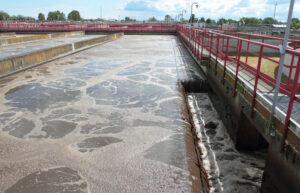
These organic materials may begin decomposing in floor drains, collection piping, sumps, equalization tanks, treatment basins, or sludge-handling equipment. If the wastewater becomes septic, it can generate hydrogen sulfide and other strong-smelling compounds. The breakdown of fats, sugars, and proteins may also produce sour, rancid, sulfurous, or ammonia-like odors.
Unlike many farms, processing plants often move wastewater through enclosed pipes and engineered pretreatment systems. Odors may become concentrated at specific release points such as tank vents, process exhausts, uncovered basins, dewatering equipment, or building ventilation outlets.
Dairy Manure Odor vs. Processing Wastewater Odor
Farm manure contains feces, urine, bedding, undigested feed, nutrients, and microorganisms. Its odor develops through a complex mix of biological reactions that can produce ammonia, sulfur compounds, volatile fatty acids, phenols, and other organic odorants.
Dairy processing wastewater has a different composition. It may contain high concentrations of readily biodegradable sugars, fats, and proteins without containing manure. When these materials degrade, they can still create intense odors, but the balance of compounds may differ.
A processing odor may be described as sour milk, rancid fat, spoiled cheese, rotten eggs, or decaying organic matter. Farm odors are more likely to carry the recognizable character of manure, although lagoon and storage emissions can also smell sulfurous, acidic, or musty.
Human descriptions alone cannot reliably identify the source. Different compounds can create similar perceived odors, and several emissions may combine before reaching a nearby property.
How Operating Schedules Affect Odor Releases
Dairy farm emissions frequently follow animal care and waste-management schedules. Manure scraping, lagoon agitation, pumping, compost turning, and land application may produce noticeable short-term increases. Seasonal temperature changes and field-application periods can also affect odor frequency.
Processing plant emissions often correspond with production cycles. Product changeovers, sanitation periods, wastewater surges, sludge dewatering, and maintenance can change the strength or character of an odor. A plant may experience an odor problem only during a particular shift or when producing a specific dairy product.
Matching complaint times with operating records is therefore essential. A consistent morning odor may point to a scheduled plant activity, while a farm-related complaint could correspond with manure handling or spreading. The timing provides evidence, but field testing is still needed to confirm the source.
Differences in How Odors Travel Off-Site
Dairy farms often contain multiple open or diffuse sources spread across a large property. Barn openings, manure storage structures, compost piles, and application fields can release emissions over broad surface areas. Controlling every release point may not be practical, so management practices and source reduction become especially important.
Processing facilities tend to have a combination of area sources and defined exhaust points. A wastewater basin may release odor across its surface, while a vent or exhaust fan discharges emissions from a specific location. Enclosing a source can make air collection and treatment possible, but an enclosure must be paired with properly designed ventilation and foul-air treatment.
In either setting, the closest source is not always responsible for the greatest off-site impact. Wind patterns, terrain, building wakes, exhaust height, atmospheric stability, and emission rate influence where an odor travels.
Why Each Facility Needs a Different Odor Study
A dairy farm odor evaluation must account for manure management, animal housing, storage practices, field application, feed handling, and weather. A dairy processing study should examine production losses, wastewater characteristics, drains, treatment processes, solids handling, ventilation, and production schedules.
The methods may include source sampling, odor-panel analysis, chemical testing, field observations, operating-data review, and air dispersion modeling. The study design should reflect how the individual facility operates rather than applying assumptions based only on its industry category.
Selecting the Right Dairy Odor Control Strategy
Farm odor management may involve changes to manure handling, storage conditions, solids separation, digestion, covers, treatment practices, or land-application procedures. Processing plants may require wastewater process changes, improved collection-system management, enclosures, foul-air extraction, vapor-phase treatment, or liquid-phase chemical treatment.
No technology is automatically appropriate simply because it has worked at another dairy operation. Odor control should address the compounds, concentrations, airflow, moisture, operating conditions, and off-site objectives documented during the investigation.
Webster Environmental Associates, Inc. remains independent from odor-control manufacturers. WEA uses site-specific data to identify the dominant sources and evaluate technologies based on each facility’s needs.
Contact Webster Environmental Associates
Contact WEA for an unbiased odor study and engineering recommendations tailored to a dairy processing facility, agricultural operation, or related wastewater system.