
At the front of every wastewater treatment plant lies one of the most odor-intensive areas in the entire system — the headworks. As incoming flows first reach the plant, turbulence, organic material, and reduced sulfur compounds combine to create strong, unpleasant odors that can travel well beyond facility boundaries.
Webster Environmental Associates, Inc. (WEA) specializes in headworks odor control design that effectively captures, treats, and neutralizes these emissions before they cause community complaints or equipment corrosion. With over four decades of experience and more than 750 completed odor control projects, WEA delivers solutions that are both reliable and cost-effective.
 Why Headworks Odor Control Is Critical
The headworks serves as the first step in the wastewater treatment process — where screening, grit removal, and initial flow equalization occur. Unfortunately, this is also where hydrogen sulfide, ammonia, and volatile organic compounds are released at high concentrations.
Left untreated, these gases not only lead to odor complaints but can also accelerate corrosion in metal and concrete structures, shorten equipment lifespan, and pose safety risks to plant personnel.
- An effective odor control system at the headworks provides multiple benefits:
- Improved community relations through odor-free operation.
- Protection of infrastructure by preventing chemical corrosion.
- Safer work environments with lower hydrogen sulfide exposure levels.
- Regulatory compliance with air quality and health standards.
- At WEA, we design systems that address all these needs simultaneously — balancing performance, energy use, and maintenance for long-term success.
Comprehensive Approach to Headworks Odor Control
Each facility has unique odor characteristics based on flow volume, wastewater composition, and process configuration. That’s why WEA begins every project with a comprehensive odor study, gathering accurate data to guide design decisions.
Our process typically includes:
- Air and Liquid Sampling: Measuring hydrogen sulfide, ammonia, and reduced sulfur compounds at the headworks and nearby structures.
- Data Analysis and Modeling: Identifying key odor sources and quantifying emissions through air dispersion modeling.
- Technology Evaluation: Comparing biological, chemical, and carbon-based systems for cost, reliability, and long-term performance.
- Customized System Design: Developing detailed plans that integrate seamlessly with plant operations and infrastructure.
This structured approach ensures that every WEA headworks design is grounded in science and proven engineering principles.
Odor Control System Design Options
Because no single technology fits every site, Webster Environmental Associates develops custom odor control systems tailored to each plant’s conditions and goals.
1. Gas-Phase Treatment Systems
At the headworks, odor-laden air must be captured and treated efficiently. WEA designs and implements gas-phase systems such as:
- Biofilters: Using naturally occurring microorganisms to biologically break down odor compounds. Ideal for consistent, moderate-strength odor sources.
- Biotrickling Filters: A more advanced biological system that handles higher gas concentrations and fluctuating loadings with minimal maintenance.
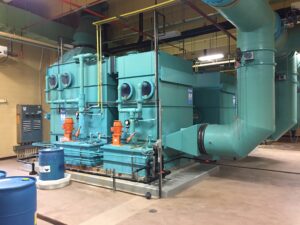
- Carbon Adsorbers: Effective for facilities that require compact systems or intermittent operation.
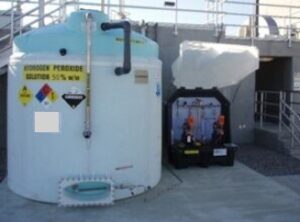
- Chemical Scrubbers: Utilizing oxidizing chemicals to treat high-strength odors quickly and thoroughly.
Our engineers carefully evaluate airflow rates, odor loadings, and footprint constraints to select and size the right system for each headworks.
2. Air Collection and Containment Design
Capturing air efficiently is just as important as treating it. Poorly designed covers or ductwork can compromise even the best odor treatment unit. WEA’s designs focus on:
- Custom Cover Systems: Including FRP, aluminum, or flexible membrane covers that contain emissions while allowing maintenance access.
- Optimized Ventilation Layouts: Ensuring uniform air capture across screens, grit chambers, and channels.
- Balanced Airflow Systems: Preventing negative pressure issues or bypass leaks that lead to odor escape.
By integrating air collection and treatment design, we guarantee the system performs as intended under all operating conditions.
3. Liquid-Phase Treatment for Upstream Control
Sometimes, controlling odors before wastewater reaches the headworks provides the greatest impact. WEA engineers evaluate upstream collection systems to determine whether liquid-phase chemical dosing can reduce odor formation at the source.
Chemicals such as calcium nitrate or iron salts can effectively suppress sulfide generation in force mains, lowering the odor load at the headworks and reducing overall treatment costs.
Independent and Unbiased Engineering
WEA maintains full independence from equipment manufacturers, giving clients complete confidence that system designs are unbiased and optimized for their specific conditions. This objectivity allows us to mix and match technologies when appropriate—achieving the best results at the lowest life-cycle cost.
Because our team continuously evaluates new technologies and materials, our clients always benefit from up-to-date solutions that meet the latest industry standards for performance and efficiency.
 Proven Experience, Measurable Results
For more than 40 years, Webster Environmental Associates has been a trusted leader in odor control engineering. Our team has completed over 750 odor control projects in the U.S. and internationally, including many for municipal wastewater treatment plants.
From small regional systems to large metropolitan facilities, we’ve helped clients reduce hydrogen sulfide concentrations, protect assets, and restore public confidence through cleaner, safer, and more sustainable operations.
Our ongoing partnerships with municipalities, utilities, and engineering firms reflect a simple fact — when WEA designs an odor control system, it works.
Complete Engineering Support
WEA supports clients throughout every phase of odor control design and implementation. Our services include:
- Odor Study and Source Evaluation
- Conceptual and Final Design
- Bid and Construction Support
- Start-Up, Performance Testing, and Optimization
- Ongoing Operation and Maintenance Consulting
By managing the entire process, we help clients save time, minimize risks, and ensure successful, lasting odor control performance.
Partner with the Experts in Headworks Odor Control
Headworks odor control design requires both technical expertise and a practical understanding of real-world operations. Webster Environmental Associates delivers both, combining engineering precision with decades of field experience.
If your facility struggles with odor at the headworks or needs to upgrade aging equipment, our team can help you find a solution that fits your site, budget, and long-term goals.
Contact Webster Environmental Associates today to discuss your project and learn how data-driven engineering can transform your plant’s air quality and community relations.