Odor control within wastewater collection systems is one of the most persistent challenges faced by municipalities and utilities. As pipelines, lift stations, and manholes carry wastewater through miles of underground infrastructure, the buildup of hydrogen sulfide and other odor-causing compounds can lead to complaints, corrosion, and costly maintenance. Webster Environmental Associates, Inc. (WEA) provides proven, data-driven collection system odor control solutions that help communities eliminate odors, extend asset life, and improve public satisfaction.
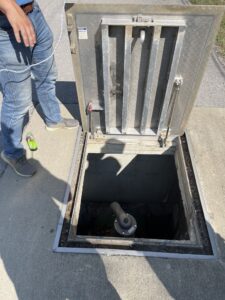
Why Collection System Odors Develop
Odors within a collection system primarily come from anaerobic conditions that occur as wastewater moves through pipes and wet wells. When oxygen levels drop, bacteria break down organic matter and release reduced sulfur compounds such as hydrogen sulfide (H₂S), mercaptans, and other volatile organic compounds.
These gases not only cause strong odors but also contribute to pipe corrosion, damaging concrete, ductile iron, and metal structures over time. As communities grow and collection systems age, odor problems can increase unless they are managed proactively.
WEA’s approach begins with understanding the chemistry and hydraulics behind every odor issue. By collecting real field data—including gas concentrations, liquid samples, and flow information—our engineers develop targeted strategies that control odors before they reach the surface or cause corrosion underground.
Comprehensive Odor Investigation and Analysis
Every odor problem starts with a cause. WEA identifies it through comprehensive odor studies tailored to each system. Our evaluations typically include:
- Air and Liquid Sampling: Measuring hydrogen sulfide and other compounds at lift stations, force mains, manholes, and interceptors.
- Data Analysis: Reviewing flow characteristics, retention time, and temperature to predict odor generation points.
- Air Dispersion Modeling: Determining how odor plumes travel and affect nearby neighborhoods.
- Corrosion Rate Analysis: Evaluating the risk of long-term structural deterioration caused by H₂S.
This investigative process provides the foundation for selecting the most effective odor control methods—ensuring each solution is based on measurable data, not assumptions.
Targeted Odor Control Solutions
Because every collection system operates differently, WEA designs custom solutions for each client. Our engineers are experienced with both liquid-phase and gas-phase odor control technologies.
Liquid-Phase Treatment
These methods prevent odor formation within the wastewater itself by changing the chemistry in the pipeline. WEA designs and optimizes systems using:
- Calcium nitrate to promote oxygen-rich conditions that stop sulfide generation.
- Iron salts to bind sulfides into non-volatile compounds.
- Hydrogen peroxide or magnesium hydroxide for rapid oxidation and pH control.
Properly designed and monitored, liquid-phase systems are a cost-effective and reliable way to minimize hydrogen sulfide production in long force mains or low-flow areas.
Gas-Phase Treatment
When odors escape into the air, gas-phase solutions capture and treat them before they reach the public. WEA’s designs include:
- Biofilters and Biotrickling Filters that use natural microorganisms to break down odor compounds.
- Carbon Adsorbers that trap odors in activated carbon or impregnated media.
- Chemical Scrubbers for high-strength or variable odor loads.
Each system is sized and configured to handle the airflow, loading rate, and maintenance schedule of the specific facility.
Independent, Unbiased Recommendations
As an independent consulting engineering firm, Webster Environmental Associates does not represent any single manufacturer. This independence allows us to evaluate all available odor control technologies and recommend only those that best fit our client’s needs, budget, and long-term goals.
Our engineers remain up to date on the latest advancements in chemical dosing, biofiltration, and carbon adsorption technologies. Whether a municipality needs to retrofit an aging lift-station scrubber or design a new treatment system for a growing community, WEA provides objective guidance based on real-world performance.
Engineering Support from Start to Finish
Odor control success requires more than good equipment—it takes precise engineering and reliable follow-through. WEA offers complete services throughout every phase of a project:
- Odor Study and Alternatives Evaluation
- Preliminary and Final Design
- Bidding Assistance and Construction Administration
- Start-Up and Performance Testing
- Operation and Maintenance Support
This full-service approach ensures consistency, accountability, and measurable results from the first sampling to long-term operation.
Proven Results in Communities Nationwide
With over 750 odor control projects completed across the United States and abroad, Webster Environmental Associates has built a strong record of success. Our municipal clients appreciate that our work delivers both immediate odor reduction and long-term system improvements.
From small rural utilities to major metropolitan systems, our collection system designs have helped clients reduce hydrogen sulfide concentrations, protect infrastructure, and improve relations with nearby residents.
Building Healthier, More Resilient Systems
Effective odor management does more than improve air quality—it protects assets and supports community growth. By preventing corrosion, municipalities extend the life of pipelines, manholes, and lift stations, reducing the need for costly repairs or replacements. At the same time, consistent odor control enhances public confidence in local utilities and supports a cleaner, healthier environment for everyone.
 Partner with the Odor Control Experts
Webster Environmental Associates has spent more than 40 years helping municipalities and utilities implement effective, affordable, and lasting odor control solutions. Our expertise in collection system odor control engineering helps communities stay ahead of problems and protect their infrastructure investments.
If your utility is experiencing persistent odors or corrosion in its collection system, we can help identify the source, evaluate solutions, and design an approach that works.
Contact Webster Environmental Associates today to learn more about how our odor control specialists can help you build cleaner systems and stronger communities.