Odor control is a top priority for wastewater treatment plants, industrial facilities, and solid waste operations that must balance environmental compliance with public perception. When unpleasant odors escape into the surrounding area, they can lead to complaints, corrosion issues, and even regulatory action.
Webster Environmental Associates, Inc. (WEA) provides advanced carbon adsorption systems for odor control, combining decades of engineering expertise with unbiased system design. With more than 750 odor control projects completed across the United States and abroad, WEA delivers reliable, data-driven solutions that keep facilities running efficiently while maintaining cleaner, safer air.
 How Carbon Adsorption Works
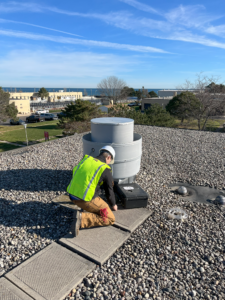
Carbon adsorption is a physical and chemical process that removes odor-causing compounds from the air stream. As contaminated air passes through a bed of activated carbon, odor molecules such as hydrogen sulfide (H₂S), ammonia, and volatile organic compounds (VOCs) adhere to the surface of the carbon particles.
The result is clean, odor-free air released into the atmosphere. Because the carbon material has an exceptionally high surface area, even small systems can remove large quantities of contaminants efficiently. This makes carbon adsorption one of the most effective and space-saving odor control technologies available.
Why Facilities Use Carbon Adsorption Systems
Carbon adsorption is valued for its versatility and consistent performance. It is often the preferred choice for facilities needing low-maintenance, high-efficiency odor control without the complexity of chemical or biological systems.
Key Advantages Include:
- High Removal Efficiency: Capable of achieving greater than 99% odor reduction.
- Compact Design: Perfect for facilities with space limitations.
- Low Maintenance: Requires only periodic carbon replacement.
- No Chemical Handling: Eliminates the need for hazardous reagents.
- Fast Response: Provides immediate odor reduction after installation.
Because carbon adsorption systems are passive and require minimal energy, they are ideal for smaller lift stations, headworks buildings, and chemical storage areas as well as large municipal and industrial operations.
Applications Across Industries
Webster Environmental Associates designs carbon adsorption systems for a variety of odor sources and environments.
- Municipal Wastewater Plants: For treating foul air from sludge storage, dewatering, or collection systems.
- Industrial Manufacturing: To capture solvent vapors, VOCs, and process emissions.
- Solid Waste Facilities: For transfer stations, waste receiving buildings, and composting operations.
- Pump and Lift Stations: Compact systems that provide consistent odor reduction in remote or enclosed locations.
Each design is based on site-specific data, airflow measurements, and gas concentrations to ensure reliable results that meet regulatory and community expectations.
The Science Behind Carbon Adsorption
Activated carbon’s effectiveness comes from its internal pore structure. The millions of microscopic pores provide enormous surface area—often more than 1,000 square meters per gram—allowing odor compounds to attach securely.
Depending on the odor profile, WEA selects the most suitable type of carbon media, such as:
- Virgin Activated Carbon: Ideal for general odor removal applications.
- Impregnated Carbon: Treated with oxidizing agents for higher hydrogen sulfide concentrations.
- Catalytic Carbon: Designed to chemically convert contaminants into non-odorous compounds.
WEA’s engineering team evaluates each site’s airflow, humidity, and contaminant profile to determine the most efficient and cost-effective media blend.
Design Considerations for Effective Odor Removal
A successful carbon adsorption system depends on much more than the carbon media itself. WEA’s engineers design systems that maximize efficiency while minimizing operational costs.
Key Design Factors Include:
- Contact Time: Sufficient air residence time ensures maximum adsorption efficiency.
- Flow Distribution: Even airflow across the carbon bed prevents channeling and premature breakthrough.
- Humidity Control: Proper moisture balance preserves carbon performance.
- Media Depth and Layering: Multiple layers or blended media can extend system life.
By carefully balancing these variables, WEA creates systems that maintain consistent odor control between media changeouts.
Single-Pass and Multi-Stage Configurations
WEA designs both single-pass and multi-stage carbon adsorption systems, depending on the odor strength and airflow volume.
- Single-Pass Systems: Compact and cost-effective, ideal for smaller airflows or low-intensity odor sources.
- Dual-Bed Systems: Incorporate two or more carbon types for extended life and high removal rates.
- Hybrid Systems: Combine carbon adsorption with pre-filtration or biological treatment for challenging odor profiles.
Each design is customized to the facility’s odor load, air handling system, and maintenance capacity.
Unbiased Engineering for Proven Results
As an independent consulting firm, Webster Environmental Associates is not tied to any specific manufacturer. This independence allows WEA to recommend the best-performing system and media without commercial bias.
Clients benefit from solutions designed solely around performance, reliability, and cost-effectiveness—not brand preferences. By working directly with multiple suppliers, WEA ensures that each carbon adsorption system delivers measurable improvements in air quality.
Performance Testing and Monitoring
Installing an odor control system is only the first step. WEA’s engineers provide comprehensive performance testing and monitoring to confirm long-term success.
These services include:
- Baseline air sampling before installation.
- Media breakthrough testing and replacement scheduling.
- Performance verification through air quality analysis.
- System audits for efficiency and compliance.
This data-driven approach gives clients confidence that their carbon adsorption systems will continue operating at peak performance.
Supporting Sustainable Odor Management
Beyond effectiveness, carbon adsorption aligns with modern sustainability goals. Systems can operate without chemicals, generate no wastewater, and require minimal power. Additionally, many carbon types can be reactivated and reused, reducing waste and overall environmental impact.
 For facilities committed to both operational excellence and environmental responsibility, WEA designs carbon adsorption systems that meet today’s highest performance and sustainability standards.
A Proven Partner in Odor Control
For over 40 years, Webster Environmental Associates has led the odor control engineering field, completing hundreds of successful projects across the U.S. and internationally. With more than 100 years of combined staff experience, the firm continues to set the standard for odor control design, testing, and implementation.
Whether your facility faces challenges with hydrogen sulfide, ammonia, or complex industrial VOCs, WEA can help you find a reliable, cost-effective solution.
Contact Webster Environmental Associates today to learn how our carbon adsorption systems can help you control odors, protect equipment, and maintain compliance—all with data-driven precision.