Odor management is an essential part of keeping wastewater treatment plants and industrial facilities running safely and efficiently. When odor emissions impact nearby communities or corrode valuable equipment, operators need solutions that are effective, adaptable, and proven to work.
Webster Environmental Associates, Inc. (WEA) designs and implements activated carbon odor control systems that provide immediate, reliable odor removal for a wide range of applications. Backed by over four decades of experience and more than 750 completed odor control projects, WEA delivers practical systems that reduce odor, safeguard infrastructure, and support long-term environmental compliance.
How Activated Carbon Controls Odors
Activated carbon is one of the most widely used materials for gas-phase odor control. Its high surface area and porous structure allow it to adsorb odor-causing compounds directly from the air. This physical and chemical bonding process traps molecules such as hydrogen sulfide (H₂S), volatile organic compounds (VOCs), and mercaptans, preventing them from escaping into the atmosphere.
Once captured, these contaminants remain securely bound to the carbon media, delivering odor-free air and stable system performance with minimal maintenance. Activated carbon units are often installed at wastewater treatment facilities, pumping stations, and industrial plants where space is limited or odor loads are intermittent.
 Why Facilities Choose Activated Carbon Odor Control
Activated carbon systems offer multiple advantages that make them an ideal solution for a wide range of applications:
- High Removal Efficiency: Capable of removing over 99% of hydrogen sulfide and similar gases.
- Compact Design: Requires less space than most biological or chemical treatment systems.
- Low Energy Demand: Operates without pumps or chemicals, minimizing energy consumption.
- Fast Installation: Pre-engineered units can be deployed quickly with minimal infrastructure changes.
- Low Maintenance: Carbon media replacement is straightforward and infrequent.
For facilities seeking a dependable odor control option with low operating costs and proven performance, activated carbon remains one of the most trusted technologies available.
Custom-Engineered Systems by WEA
At Webster Environmental Associates, every odor control system begins with an understanding of the site’s unique conditions. Our engineers evaluate airflows, gas concentrations, and load profiles before selecting the most effective configuration.
Tailored Designs for Every Application
We design activated carbon systems that match the facility’s specific needs, including:
- Headworks and Sludge Dewatering Areas: Compact systems that handle concentrated hydrogen sulfide.
- Lift Stations and Pumping Facilities: Reliable treatment for variable flow rates and odor spikes.
- Chemical Storage and Air Handling Areas: Continuous removal of corrosive vapors and VOCs.
- Industrial Exhaust Streams: Flexible designs that integrate with process ventilation systems.
WEA provides both single-pass and dual-bed configurations, depending on odor load, air volume, and desired removal efficiency. Dual-bed systems can combine multiple carbon types or include pre-filtration layers to extend media life and reduce replacement costs.
Types of Activated Carbon Media
Not all activated carbon is created equal. WEA selects from a variety of carbon formulations to match the compounds being treated and optimize performance.
1. Virgin Activated Carbon
Produced from coal, wood, or coconut shell, this standard form of carbon offers a broad adsorption spectrum for moderate odor concentrations.
2. Impregnated Activated Carbon
Enhanced with additives such as potassium permanganate or sodium hydroxide, impregnated carbon improves oxidation and extends life when hydrogen sulfide levels are high.
3. Catalytic Activated Carbon
Specially treated to promote chemical reactions on the carbon surface, this type is ideal for high-strength industrial odors and rapid gas breakdown.
4. Specialty Blends
In applications involving mixed gases or high moisture, WEA may recommend blended media that balances capacity, durability, and regeneration potential.
Each project includes an evaluation of air chemistry, humidity, and environmental factors to determine the most effective media composition.
Integrating Carbon Systems with Broader Odor Control Strategies
Activated carbon odor control works exceptionally well as a standalone solution, but it can also be integrated into larger odor management strategies.
For example:
In a two-stage treatment system, carbon polishing units can follow biological treatment (such as biofilters or biotrickling filters) to remove residual odors.
In intermittent or remote facilities, carbon systems can provide dependable odor reduction where biological systems would be impractical.
For high-load situations, hybrid systems combining carbon and chemical scrubbing can deliver maximum efficiency.
Webster Environmental Associates engineers develop the right balance of technologies to meet performance goals and maintain long-term operational efficiency.
Designing for Safety and Accessibility
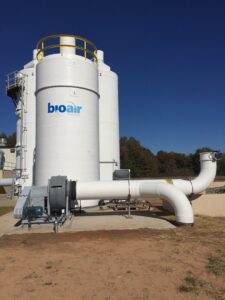
WEA designs every system with safety and ease of maintenance in mind. Activated carbon units are available in a variety of configurations, including vertical vessels, horizontal canisters, and modular housings.
Key design features often include:
- Corrosion-resistant materials for long service life.
- Quick-access hatches for media change-outs.
- Differential pressure monitoring for performance tracking.
- Explosion-proof ventilation options when treating volatile gases.
Each design emphasizes accessibility, durability, and reliability to meet the rigorous demands of continuous plant operations.
Independent and Unbiased Engineering
Because WEA operates independently from manufacturers, clients receive objective recommendations focused solely on their facility’s needs. This independence allows us to evaluate multiple suppliers and system types—ensuring each project delivers the best performance per dollar invested.
Our expertise spans every major odor control technology, enabling us to compare carbon-based systems with biological and chemical alternatives to determine the most cost-effective solution.
Performance Testing and Long-Term Support
Webster Environmental Associates offers performance verification testing for every installed system. This ensures that carbon units are meeting odor removal targets and complying with air quality standards.
We also provide ongoing support, including:
- Periodic sampling and monitoring.
- Carbon replacement planning and scheduling.
- Performance audits and optimization.
- Training for facility personnel on system operation and maintenance.
This hands-on partnership ensures consistent results and extends system life for years of dependable odor control.
Partner with the Experts in Activated Carbon Odor Control
Activated carbon odor control systems remain one of the most efficient and flexible tools for managing odor emissions in wastewater and industrial settings. With decades of specialized experience, Webster Environmental Associates combines technical expertise with proven results to deliver systems that perform day after day.
If your facility struggles with persistent hydrogen sulfide or VOC emissions, we can help design a data-driven, cost-effective carbon system that fits your space, budget, and operational goals.
Contact Webster Environmental Associates today to learn more about our activated carbon odor control solutions and discover how our expertise can make your air cleaner and your operations more efficient.